

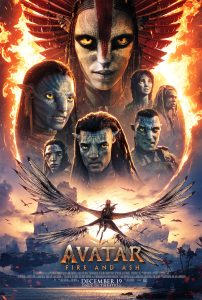
James Cameron’s latest Avatar installment splashes into theaters this week, three years after 2022’s Avatar: The Way of Water—I recommend a refresher viewing, if only so you remember how little of it actually mattered. The question hanging over this franchise is no longer whether Cameron can still build worlds (he can), but whether he has any interest whatsoever in populating them with characters, ideas, or stories that rise above the intellectual level of a theme-park ride safety video.
Not much has changed since our last return trip to Pandora. Jake Sully (Sam Worthington) and his endlessly endangered Na’vi brood remain camped with the waterlogged Metkayina clan, hiding from humans who remain spectacularly bad at learning lessons, adapting strategy, or accomplishing anything resembling competence.
Cameron’s greatest weakness—characters—remains fully intact. Colonel Quaritch (Stephen Lang), somehow resurrected yet again, continues his laser-focused obsession with killing Jake, powered by a grudge so ancient it may qualify as a renewable energy source. Every villain around him is similarly brain-dead, marching in lockstep like rejected action figures. General Ardmore (Edie Falco) inexplicably keeps her job despite failing upward at a pace that would make most corporate executives blush. Parker Selfridge (Giovanni Ribisi) returns solely to remind audiences that, yes, this is still the same franchise—snarl included, performance optional, paycheck duly cashed.
Then there’s Spider, played by Jack Champion, whose performance is so aggressively inert it actively drains energy from every scene it touches. Watching him struggle through scenes is like observing a man attempt Shakespeare while drowning—except without the tension.
Narratively, Cameron continues strip-mining Hollywood’s most exhausted clichés: noble natives, rapacious colonizers, environmental destruction, and industrial-scale whaling symbolism beaten into the ground with all the subtlety of a wrecking ball. At this point, the franchise feels less like science fiction and more like Moby-Dick revenge porn.
The film’s lone spark of life arrives with the Mangkwan, a volcanic clan introduced solely to remind us what the movie might have been. Their leader, Varang (Oona Chaplin), is pure, feral charisma—an underfed, underdressed, take-no-prisoners menace who dominates the screen the moment she appears. She’s essentially every iconic Wes Studi role compressed into one furious ball of rage, and the movie improves instantly whenever she’s about.
And now let’s dispense with the pretense. Nobody is here for the plot. Nobody is here for the acting. We’re here because James Cameron knows how to overwhelm the senses like no one else alive. Pandora is bigger, bolder, bluer, and more aggressively immersive than ever. I would happily watch competitive Excel spreadsheeting if Cameron rendered it in IMAX 3D.
Assuming Cameron survives long enough to deliver the next chapter, we’ll reconvene in four years to once again marvel at the visuals and politely ignore the storytelling. That’s fine. This isn’t a meal—it’s sugar. Empty, excessive, and engineered for maximum pleasure with zero nutritional value. As desserts go, though, it’s one hell of a sugar rush.