
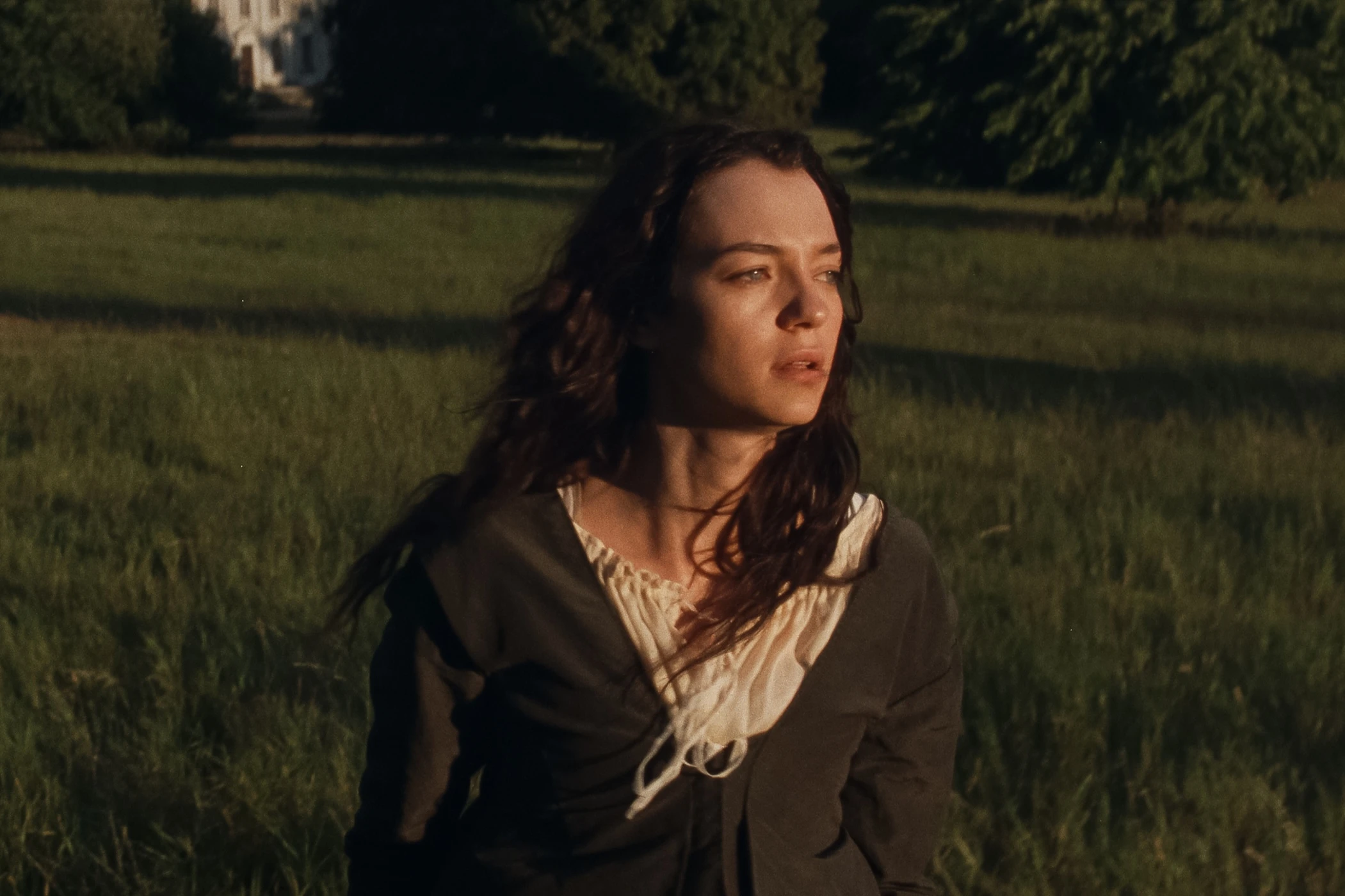
Among many other winning elements in Ang Lee’s 1995 version of the seminal Jane Austen novel (her debut), the casting was superb: Emma Thompson (who also wrote the screenplay), then 36, in the role of the venerable Elinor Dashwood; a then mostly unknown Kate Winslet as her wild-child younger sister, Marianne; debonair Hugh Grant as Elinor’s would-be paramour Edward; dashing Greg Wise as Marianne’s first love, Willoughby; and, finally, the late, brilliant Alan Rickman, as the tragic Col. Brandon, whose unrequited love for Marianne is yet another emotional wound for a man already suffering a plague of them.
So vivacious and compelling were these actors, they came to embody their roles in a way that would be nearly impossible to shake — unless, as director Georgia Oakley has attempted, one were to try a version notably different in tone and thrust. This new version has various things to recommend it, including a more versatile and beguiling visual palette, and a strict adherence to the original text, but a murkiness of tone, and a singular casting catastrophe, costs the production dearly.
We are in the English countryside in the early 19th century. The Dashwoods, eldest Elinor (Daisy Edgar-Jones), middle sister Marianne (Esmé Creed-Miles), youngest, Margaret (Bodhi Rae Breathnach), and matriarch Mrs. Dashwood (Caitríona Balfe) have just been dealt a significant blow. After the death of their father, Mr. Dashwood, their half-brother, John (Tom Brooke), led by the nose by his beastly wife, Fanny (Stacy Martin), provides the bare minimum for the family to survive upon, and turns them out of their country estate so his uncharitable wife can have the place to herself.
With nowhere else to go, the Dashwoods are rescued by some kindly distant cousins, Mrs. Jennings (Fiona Shaw), and her boisterous son-in-law, John Middleton (Turlough Covery), who cheerfully allows them to stay in a cottage on his estate in Devonshire. Along the way, Elinor takes kindly to Fanny’s charming brother, Edward (George McKay), a decent chap who seems to take an equal fancy to her. Meanwhile, impetuous Marianne falls head over heels for the dreamy Mr. Willoughby (Frank Dillane), a young man with considerable hubris, and a gift of grandly romantic gestures far beyond the limited powers of the considerably older and more taciturn Col. Brandon (Herbert Nordrum), who had also taken a significant interest towards the lively middle sister, but gets unceremoniously passed over for the younger rogue.
From this set-up, the story teeters and totters between rapturous joy (wild-eyed Marianne’s euphoric feelings for Willoughby), absolute heartbreak (also Marianne), and an even more disastrous slow ebbing of hope (Elinor, after she finds Edward already reluctantly spoken for), before the good ship Dashwood finally begins to right itself.
To distinguish it from the Lee/Thompson vehicle, Oakley has chosen to avoid the former film’s more gentle, clear-eyed tone. Thompson streamlined Austen’s more sprawling story in favor of a more direct appeal, with much of the film’s emotional core kept staunchly repressed (director Lee’s specialty area) until its almost giddy ending.
By contrast to the previous rendition’s warm geniality, Oakley’s film is much more concerned with the messiness of 19th century life — dust and dirt ring the hemlines of long dresses, fingernails are rough and often filthy, and the natural world surrounds the sisters in its sweep. The film often cuts from the human characters in various states of emotional upheaval to a bird swooping in the sky, or a herd of deer glancing up in alarm. Spider webs are frequently invoked, and the film has far more dogs in it than Austen herself might have imagined.
In keeping with this idea, the characters themselves are messier, less clearly delineated. Even Willoughby, villain of villains, is given a bit of a soliloquy to suggest he, too, is simply trapped in a dragging current he can’t escape (this idea, it must be said, far more subtle and effectively rendered in Lee’s version with a shot at the end of the man alone up on a hill distantly above the Dashwood’s house, looking for all the world as if he just lost his soul). The characters are still there, mostly, but given more gradation, making them as murky and shadowy as much of the natural light filtering through the mossy, darkened interiors.
Where this works in the film’s favor, it’s reasonably well-acquitted. Edgar-Jones, as usual, does fine, if not quite so repressed work, and Creed-Miles makes for a more off-kilter, emotionally torrential Marianne. But there is a bad misfire with Dillane, whose callow Willoughby seems shifty and capricious from first blush. If we don’t at least slightly fall for him the way Marianne does, his treachery feels less monumental, and her affections thereby less justified. There, too, despite Edgar-Jones being closer in age to the novel’s heroine (she’s 28; Elinor likely closer to 20), something is lost with her still being so young and beautiful, in counter to the older Thompson, who portrays an Elinor who really is facing what feels like her only chance at real love.
The stakes are more starkly drawn and commanding in Lee’s film, resonating such that in the dramatic turnaround of Miss Dashwood’s prospects with Edward — as rendered brilliantly by Thompson’s Elinor finally taking a full breath in for what feels like the first time in the film — the emotional power is thrillingly cathartic in its rush. No such rhapsody in Oakley’s vision, beyond that of two decent people finally getting a chance to be together. Plenty nice, but hardly transformative.
The director does engage in a subtle gender switching (beyond the somewhat peculiar casting of a nonbinary actor in a minor role) towards the end, with both Edward and Col. Brandon put in the traditional position of the female, awaiting the word from their male suitors. This unconventional power transition suggests other ways in which the film could have played more with its own conventions, but instead, despite its darker atmospherics, in the end, the film chooses more or less to hew the standard line — a half-measure and, perhaps, a missed opportunity.
Willoughby’s casting might be the film’s single worst transgression, but the entire production feels less than essential. Every generation is allowed to reinterpret the classics in its own name, to be sure, but this gloomy catalog offers more dirge than mirth, missing out on one of the most treasured elements of the Lee/Thompson classic, the encompassing satisfaction of earned joy.

1 Comment
Sounds like a worthy effort but the earlier version even more worthy. So really why should one see this version?