
This summer’s entry in the newly hatched Gunn-centric DCU is based on a 2021comic miniseries by the celebrated duo of Tom King and Bilquis Evely, which just so happens to be one of the most lyric and contemplative superhero series of the 21st Century.
Based loosely on the classic western True Grit, the original comics focus on a dispirited Kara (Supergirl’s actual name), taking refuge on a distant planet, and becoming embroiled in a dispute between a fierce, young girl named Ruthye, whose family was brutally murdered by the villain Krem of the Yellow Hills, part of a group of bloodthirsty brigands terrorizing the local planets. When this same Krem shoots and poisons Kara’s beloved dog, Krypto, she and Ruthye track down the pirates together, in a race against time, in order to get the antidote, and settle things up between Ruthye and Krem.
As narrated by young Ruthye, she witnesses the heroic valor and essential kindness of Kara, even as the odds against her stack up. Along with King’s incisive writing, Evely’s evocatively wistful imagery worked together to produce a thoughtfully melancholy study of those qualities in us we most aspire towards, and so routinely fail.
Gunn’s DCU, it is safe to say, doesn’t much strive for meditative as a vibe, per se. So, the difficulty with this project is to hem together the pensive and introspective mood of the source material, with the full-force propulsion and lighter tone of a summer blockbuster. In the Gunn spirit, then, rather than prosaically piling on the words, let’s switch over to bulletpoints, The Good, The Bad, and the Noteworthy.
The Good
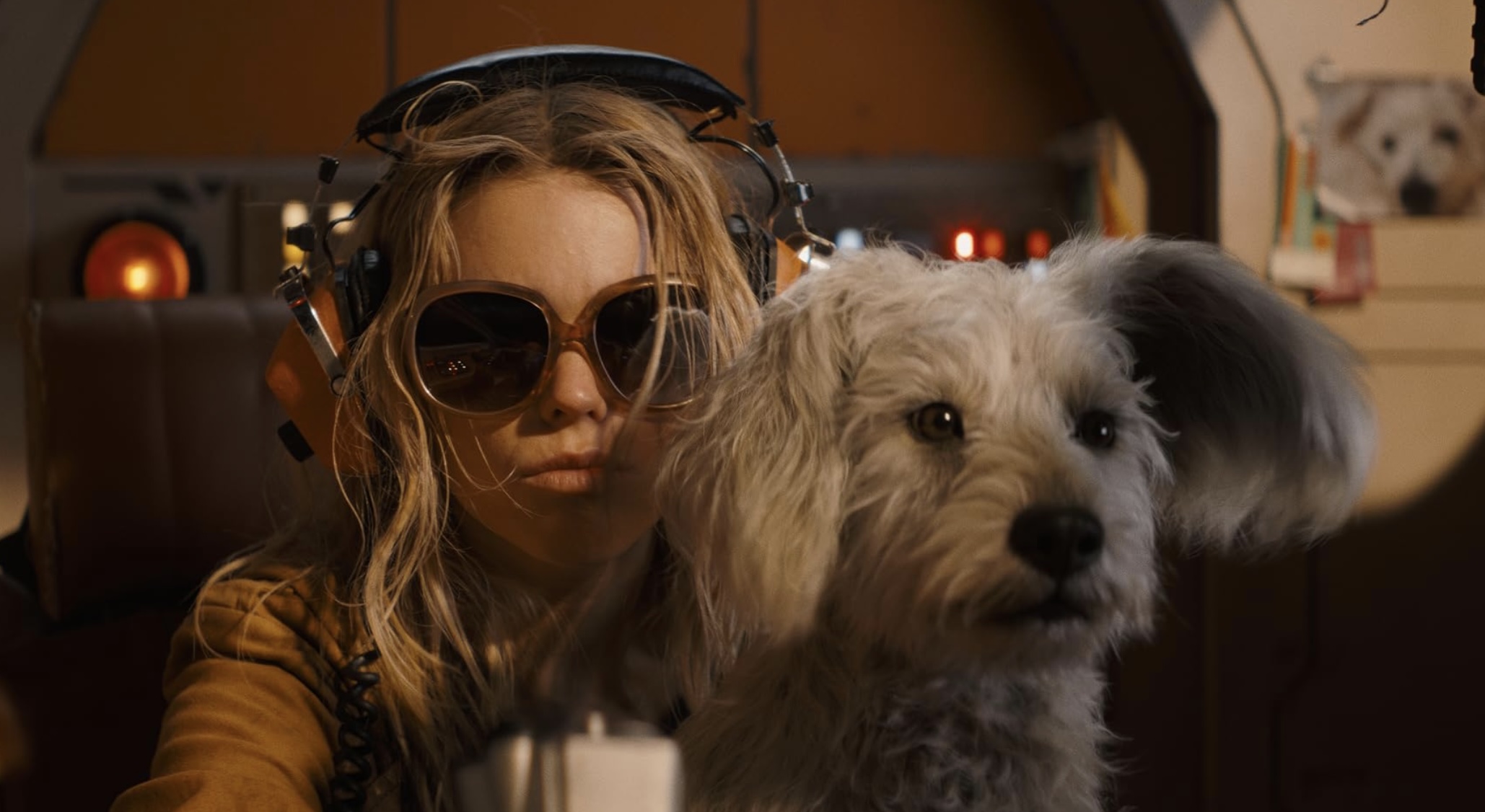
-One thing Gunn and director Craig Gillespie certainly get right is the casting of Kara. Milly Alcock, a charming, 26-year-old Aussie, has a kind of scruffy vulnerability to her (as seen in the first season of “House of the Dragon”). She plays Kara as a jaded, depressed party girl, traveling to planets with red suns, where her super-powers are diminished enough for her to get well and truly drunk. The film’s extended opening montage has her bumming around the galaxy, hopping from one giant party to another, crowdsurfing the night away, and waking up the next morning, hungover as hell, trying to avoid the frequent calls from her well-meaning, but overly enthusiastic cousin, Superman (David Corenswet). Supergirl is a bit of a mess, it would seem, and Alcock, with squinty eyes and perpetually scattered blonde kinks, perfectly embodies the would-be debauched young woman, trying to make sense of the world by routinely knocking herself into a stupor.
-Equally strong casting for Ruthye (Eve Ridley), who as a 13-year-old is forced to watch her beloved family get butchered by the evil Krem (Matthias Schoenarts), forever pledging herself to the knave’s demise by any means necessary. Ridley, who had previously done mostly TV work, exerts the right amount of grim determination to sell Ruthye’s pain, albeit mostly without the startlingly erudite elocution as from the comics. As with Superman, the film casting is exceptional, which goes a long way to sell the film.
-Krypto, as CGI as he clearly is, acts more like a rambunctious, ill-behaved pooch than usually gets portrayed in such fare. As with Superman, the lovable mutt plays a significant role in the shape of the story, although here spending much of his time lying in mute misery while poisoned. Still, as a dog-lover, it does my heart good to see the fuzzy chap chasing after feathers, and leaping up to try and get a giant, rhino-like creature to play with him. As the emotional centerpiece — thankfully, the film doesn’t try to shoehorn in any kind of romantic entanglement for Kara: Krypto is her one true love — you could certainly do worse than a cock-eared rascal like this doggo.
-The film is a trim 1:47, which, in the age of unnecessary runtime bloat (looking at you, Project Hail Mary — 2:36, indeed!) feels oddly refreshing. To be fair, some of that compression doesn’t necessarily work so wonderfully, story-wise (see below), but it still is nice to go see a 7:00 pm screening, and leave the theater when it’s still light outside.

The Bad:
-Well, it achieves a good deal of its brevity at the substantial risk of feeling choppy, at times, and a bit more incoherent in others. To be fair, it would be nearly impossible to compress the King/Bilquis saga into a small, two-hour window, so screenwriter Ana Nogueira doesn’t really try. Instead of the breadth of Kara and Ruthye’s extended journey together, the film is quickly subdivided by several encounters/fight scenes. One involves a group of tech pirates, who intercept the interstellar “bus” Kara and Ruthye first travel on in their brigand hunt, which features a satisfying ass-whupping. Subsequent large battles, however, tend towards the overly swoopy and busy: One such showdown with the Brigands on a rough-and-tumble junkyard planet, gets so caught up with whipping the camera over hither and yon that it actually bleeds the scene of dramatic impact. Gillespie seems fearful of losing his audience’s attention such that he sort of throws everything at you all at once, frantically zooming around the action scene so you constantly feel as if you’re missing something.
-Although the Gunn-based DCU has pulled back (at least so far) on the MCU’s increasingly irritating way of using the current movie to propagate many other sequels to come, this film does include another character, Lobo (Jason Momoa, more or less doing his standard Momoaism, only with fangs and lots of eye black), whose purpose seems murky at best beyond a plot device or two (I’m aware that the character was actually first intended to be included in the comic series, but, based on what he does here, not much was lost without him). It’s certainly no dealbreaker, but it does annoy me that Kara eventually comes to need his intervention at a crucial point of the final battle, diminishing, even in a small way, her own agency.
-It’s not usually worth pointing out plotholes in such films, if you’re enjoying it, you likely won’t care one way or the other, but there are a couple of confusing bits that feel as if they could have been easily worked out if the screenplay had even briefly touched on them. But, alas, we don’t know why young Kara, on her dying section of Krypton, was unaffected by the green radiation that was killing everyone else; nor how the Brigands knew enough of her background — having just met her a single day before — to have prepared similarly endowed Green Kryptonite weapons for their battles with her. Ah, well.
-The numerous fight scenes are all peppered with specific needle drops — everything from Wet Leg, and Eagles of Death Metal, to Rilo Kiley, Ella Fitzgerald, and Halsey — that spark up and fade out as if being spun by a particularly bored DJ before taking their Ativan. It’s as if Gillespie is trying to conjure his inner-Gunn, but few if any of the terribly precious music cues hit the way he intends. Ditto for the numerous would-be rousing sequences of Kara rising up in her glory, only to be taken down again, giving the numerous fight scenes little to differentiate themselves, and even less to hold onto. There is also little rhyme or reason to the power hierarchy: In one such scene Kara struggles to take down a brigand on her own, in another, small, non-powered Ruthye is able to dispatch one with little more than her own gumption.
The Noteworthy:
-In keeping with the idea that the DCU is at last dropping its clumsy attempts to ape the MCU, Gillespie’s film actually ends only once. There are no post-credit scenes, no teasing of what might come next. Simple and clean, which finally establishes this extended franchise is going to find its own way, thank you very much, a smart play by the Gunn regime.
-It is certainly the first superhero film in either universe to include a urinating dog as part of its opening shot. Don’t ever change, Krypto.
Conclusion:
It’s not a homerun, but a solid enough single to at least get on base for the DCU. It would have been fantastic had the film captured more of the melancholy power of the comic series, but the movie has a very different job to do, and for the most part, it succeeds well enough. It continues to be seen whether the fast, frolicking Gunn-i-verse will be able to get past its good intentions and amiable sillinesses to add up to something with more heft, but it might take us several years, and quite a number of other films, before that can be safely determined.

1 Comment
We need more reviews by critics who, along with all their knowledge of cinema and comics and their sharp insights, are also genuine dog-lovers. Way to go, Piers!